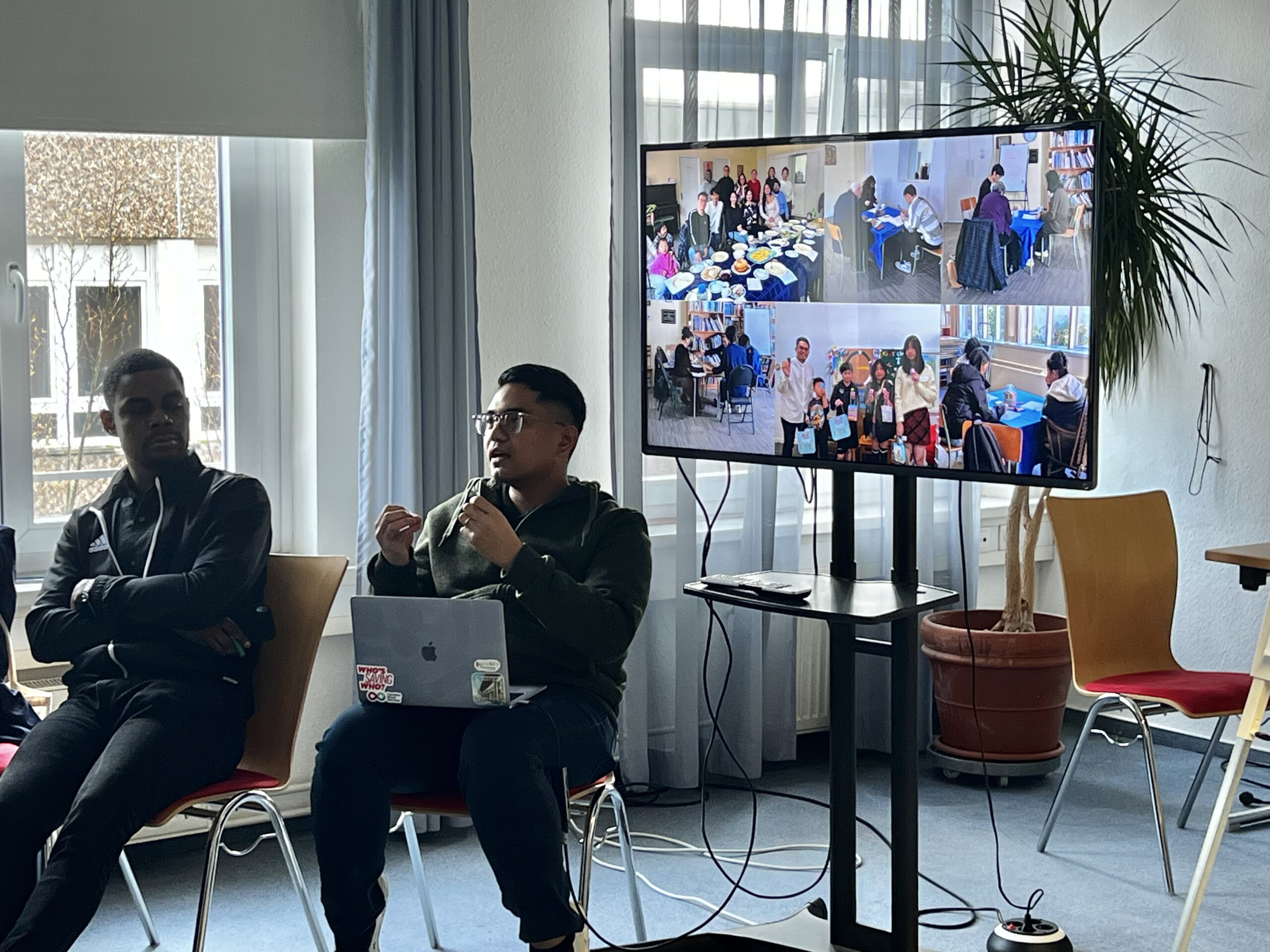
In March 2026, participants from diverse contexts gathered in Hamburg for the Mission Diversity Winter School, engaging in questions of faith, diversity, and lived experience. In this personal reflection, Gretsjanialdi Apner shares a moment of encounter that challenged and shaped his perspective in unexpected ways.
A Story of an Unsettling Encounter
Spending a week in Hamburg, Germany, for a training on discrimination and racism in a multicultural context was something I didn’t expect would stay with me this deeply. For a while now, I’ve been curious about how different regions respond to issues of multiculturalism, immigrants, discrimination and racism, especially beyond North America. Europe, in particular, felt like an important context to learn from. I carried questions with me when I arrived. One of the biggest ones was this: How do churches, specifically Christians, in Europe respond to immigrants and racism within their own societies? Not just in theory, but in real, lived practice. During the training, I met young people from different European countries, not only from Germany. Listening to them felt like opening windows into different realities. Each of them carried their own stories, their own struggles, and their own perspectives on racism and discrimination in their contexts. And for me, this wasn’t just learning “about” something – it was experiencing it personally, through relationships.
The training itself was very practical. We weren’t just talking about big ideas – we were being equipped to respond. The goal was clear: we were being formed to become agents of change, people who can carry and spread a spirit of inclusivity in the middle of real issues of discrimination and racism. One thing that challenged me deeply was how we were invited to question our own comfort zones. Not just the obvious ones – but also the subtle, hidden ones. The ways we think, the assumptions we carry, the patterns of how we relate to others, especially across cultural differences. It made me realize that sometimes, without even noticing it, I’ve been shaped by certain perspectives that limit how I see others.
We were also invited to critically revisit words that we often take for granted: words like human rights, inclusivity, and diversity. These are words I’ve heard many times, even used in ministry. But through this process, I began to ask myself: Do I really understand what these words mean in practice? Or have they become just familiar language without deep engagement? That question stayed with me.
Another part that really stood out to me was learning about non-violent communication. It’s a way of communicating that tries to create safety for everyone involved, without losing honesty or purpose. I found it both inspiring and humbling. Because if I’m honest: it sounds ideal, but it’s also very difficult. Each person carries different communication habits, emotional capacities, and personal histories. There’s no guarantee that this method will always “work.” But still, I see its value. It opens possibilities. It creates space where understanding can happen, even in difficult conversations about racism and discrimination.
And then, outside the training room, I encountered something that I wasn’t fully prepared for. I witnessed racism directly when I was walking around the city by myself. It was subtle, but also very clear. This moment stayed with me. They were quiet, almost unspoken, but deeply painful. I remember feeling a mix of emotions: shock, sadness, and something else that I had to sit with for a while. Even though I was not the direct target, being present in those moments was enough to affect me. I could feel the tension, the discomfort, the sense of rejection in the air. And I began to reflect more deeply.
Behind those actions, I sensed fear. A fear of difference. A hesitation to open oneself. And ultimately, a kind of rejection that denies the humanity of the other. Those experiences didn’t just inform me – they moved me. They made this issue no longer abstract or theoretical. It became real, embodied, and urgent. I realized that if I want to engage intercultural ministry seriously, I cannot stay at the level of ideas. I need to be willing to feel, to listen, and to confront uncomfortable realities.
This week in Hamburg didn’t give me all the answers. But it did something more important. It unsettled me, in a good way. It opened my eyes a little wider. And it pushed me to take this journey of intercultural understanding more seriously. Because at the end of the day, this is not just about learning concepts. It’s about learning how to see people, fully, honestly, and with dignity.