In a world marked by war, corruption, violence, uncertainty, polarisation, and division, young people are called to imagine and create something different: communities of peace, justice, and reconciliation. Peacebuilding is more than the absence of conflict, it is the active daily work of transforming relationships, healing wounds, and rebuilding trust, and being realistic, the call for peacebuilding and transformative leadership has never been more urgent than it is now.
Like Nehemiah rebuilding the walls of Jerusalem or Esther standing courageously for her people, young people today are called to be builders of peace in a divided world. As the Psalmist David reminds us, “Seek peace and pursue it” (Psalm 34:14), and as Jesus said, “Blessed are the peacemakers, for they will be called children of God” (Matthew 5:9). Inspired by these words, WSCF Europe has dedicated this year to the work of peacebuilding through three key initiatives: the “Frame the Future – Youth Inclusive Peacebuilding” project, the international youth event “A Future and a Hope: Bridging Youth Resilience Across Borders”, and the study session “Youth in Leadership Today: The Pathway Forward”. These experiences invite youth to reflect on the many stages of peacebuilding, from understanding conflict and promoting dialogue to creating just, inclusive, and hopeful communities across Europe and beyond.
Now, we are invited to take stock of the lessons learnt and to provide a platform for youth voices to address the most pressing challenges for peacebuilding and just and lasting peace.
How do we, as young Christians, engage with conflict and reconciliation? How can we nurture hope, justice, and healing across boundaries? And in what ways can our faith, creativity, and collective action empower us to become agents of peace within our own contexts?
Across the world, young leaders are demonstrating that courage, imagination, and faith can open new pathways towards peace. Whether through grassroots activism, interfaith dialogue, environmental justice, or conflict mediation, young people are at the heart of shaping a more compassionate and equitable future.
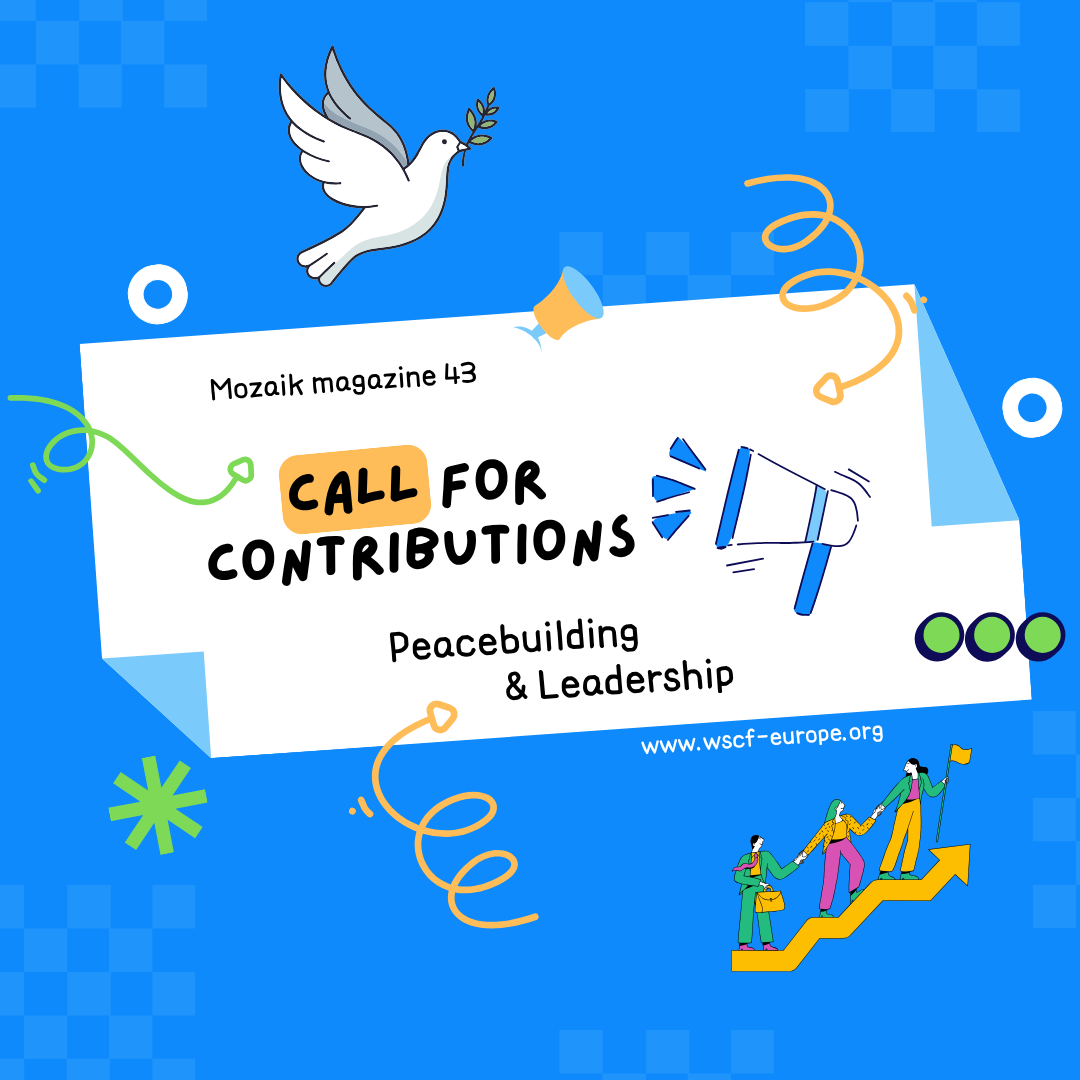
Mozaik 43 invites young voices, and to all those who want to contribute, from anywhere in the world to share their stories, insights, and creative expressions on Peacebuilding, with a special focus on Youth Leadership. Whether you are a youth leader/worker, grassroots activist, mediator, faith leader, a student, an artist, or someone passionate about peace and reconciliation, your perspective matters.
We are looking for:
- Articles (up to 2,000 words)
- Personal stories and reflections
- Poems, prayers, or liturgies
- Visual art, photography, and design (PNG or JPG format)
- Other creative expressions (e.g. interviews, infographics, multimedia ideas)
The deadline to send your contribution is on 23 November 2025.
Send your contributions or questions to Mozaik’s Editor-in-Chief, Laura Gomez, at mozaik@wscf-europe.org
Style guidelines for articles:
- British English spelling
- Word limit: maximum 2,000 words
- Please use APA (7th edition) referencing style for any citations and include a full reference list at the end of your text.
Guidelines for images:
- PNG or JPG format – A full-page image should be around 1748 × 2480 pixels at 300 dpi. (If the image will cover only half a page, it can be proportionally smaller, but still at 300 dpi)
- For the small photos of the authors (next to the articles) 150 dpi or around 500 × 500 pixels is sufficient. Best option: half-length portrait with natural light.
In addition to your contribution, please send a short bio (no more than 50 words) and a high-quality picture of yourself (if you are comfortable with it)
Not sure what to share? Here are some possible angles to explore:
- Practical peacebuilding: How are young people transforming conflict, building dialogue, or fostering reconciliation in their communities?
- Faith and peace: How does your faith or spirituality shape your understanding of peace, forgiveness, and justice?
- Youth leadership for peace: Stories of young leaders mobilizing communities for healing, advocacy, or nonviolence.
- Systemic justice: Addressing structural violence, inequality, or climate-related conflicts through youth-led action.
- Interfaith and intercultural encounters: Building bridges across differences to cultivate a culture of peace.
This is the space where everybody can:
- Share powerful stories of young people building peace
- Inspire and equip one another to act for justice, reconciliation, and hope
- Amplify the creativity and faith of youth leaders
- Build networks across cultures and contexts
Guided by God’s grace and strengthened by our shared faith, we are reminded that peace begins when we work together as a team to reach a goal. When young people walk together in hope and understanding, the light of reconciliation shines through them, inspiring communities and transforming the world in quiet, powerful ways.
